Why a one-page guide beats a brand book
Big brand books are written for designers and agencies and are mostly about the logo. What someone writing a Tuesday post needs is much smaller: how should this sound, who is it for, what do we never say, and what does good look like. If the guide is short enough to keep open while writing, it gets used. If it is not, it gets ignored, and the voice drifts with whoever writes the post.
1. Three to five tone words, each with a “not”
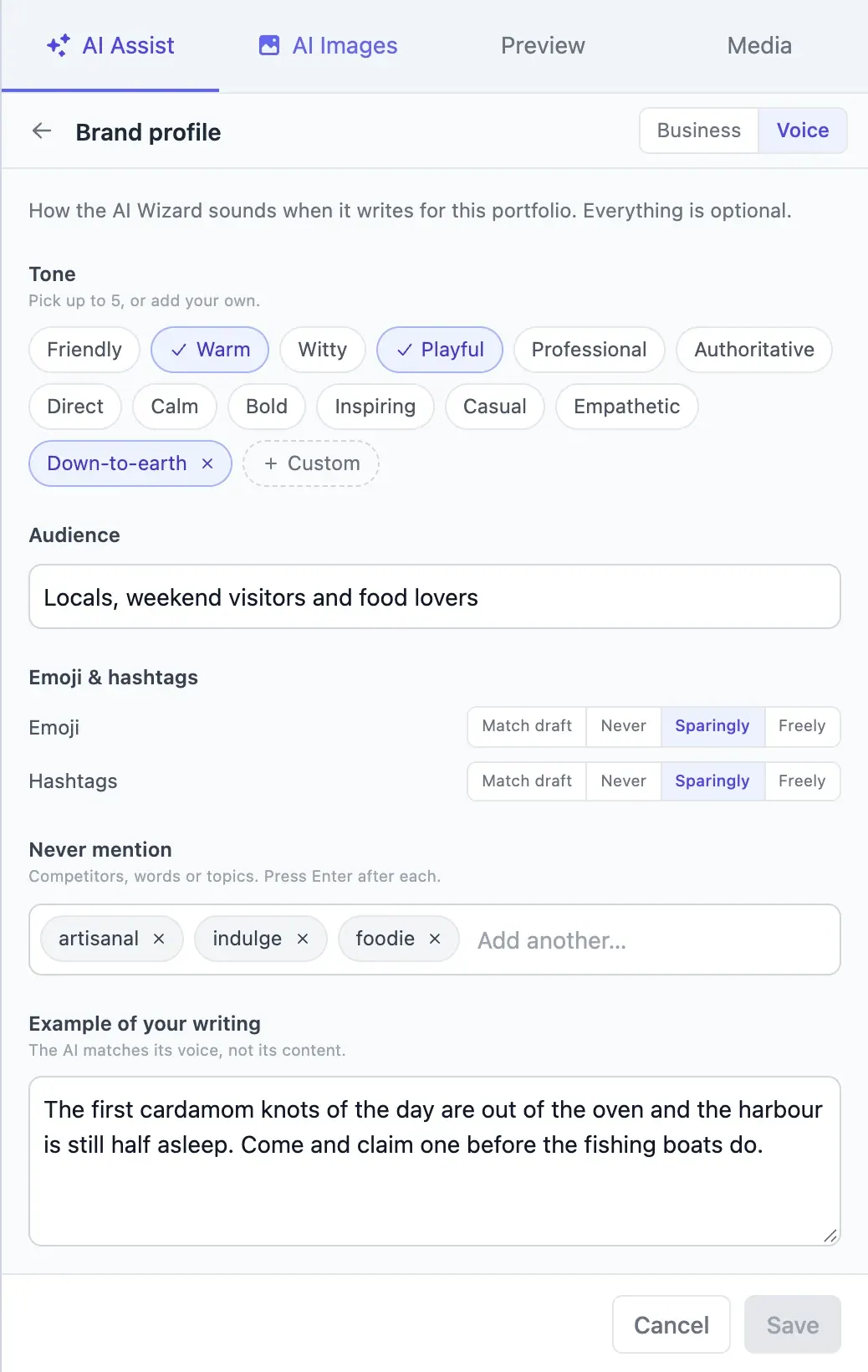
Pick three to five words for how you sound, then pin each one down with what it does not mean. “Friendly” on its own describes every brand on earth; “friendly, not over-familiar” tells a writer to drop the “hey lovely!”. The “not” is where the guidance actually lives.
- Warm, not gushing
- Playful, not silly
- Down-to-earth, not scruffy
- Expert, not lecturing
2. Who you are talking to
One or two sentences about the audience, in plain words: “Locals and weekend visitors to Whitby who care about good bread and don’t want a lecture about it.” This decides vocabulary more than any tone word does - whether you can say “laminated dough” or need to say “flaky”.
3. Words and topics you never use
A short list of hard rules is the fastest way to stop a voice drifting. Include the clichés you are tired of, competitors’ names, and anything legally or personally sensitive. Writers - and AI tools - follow a ban list far more reliably than a description of a vibe.
- Clichés: “indulge”, “game-changer”, “elevate”, “exciting news”
- Competitors and their products by name
- Claims you cannot back up: “best in Yorkshire”, “award-winning” without the award
4. Emoji and hashtag rules
Decide once, write it down, and stop debating it post by post. “Sparingly” is a valid rule if you define it: at most one emoji, never in the first line; two or three specific hashtags at the end, never a wall of them. Say whether it differs by network - many brands use none on LinkedIn.
5. Two real posts that sound right
Description only gets you so far. Paste one or two posts you are proud of and label them “sounds like us”. A writer will copy the rhythm; an AI tool told to match the voice but not the content will do the same. If you have one post that sounds wrong, include it too, labelled “not like this”.
Keep the facts separate from the voice
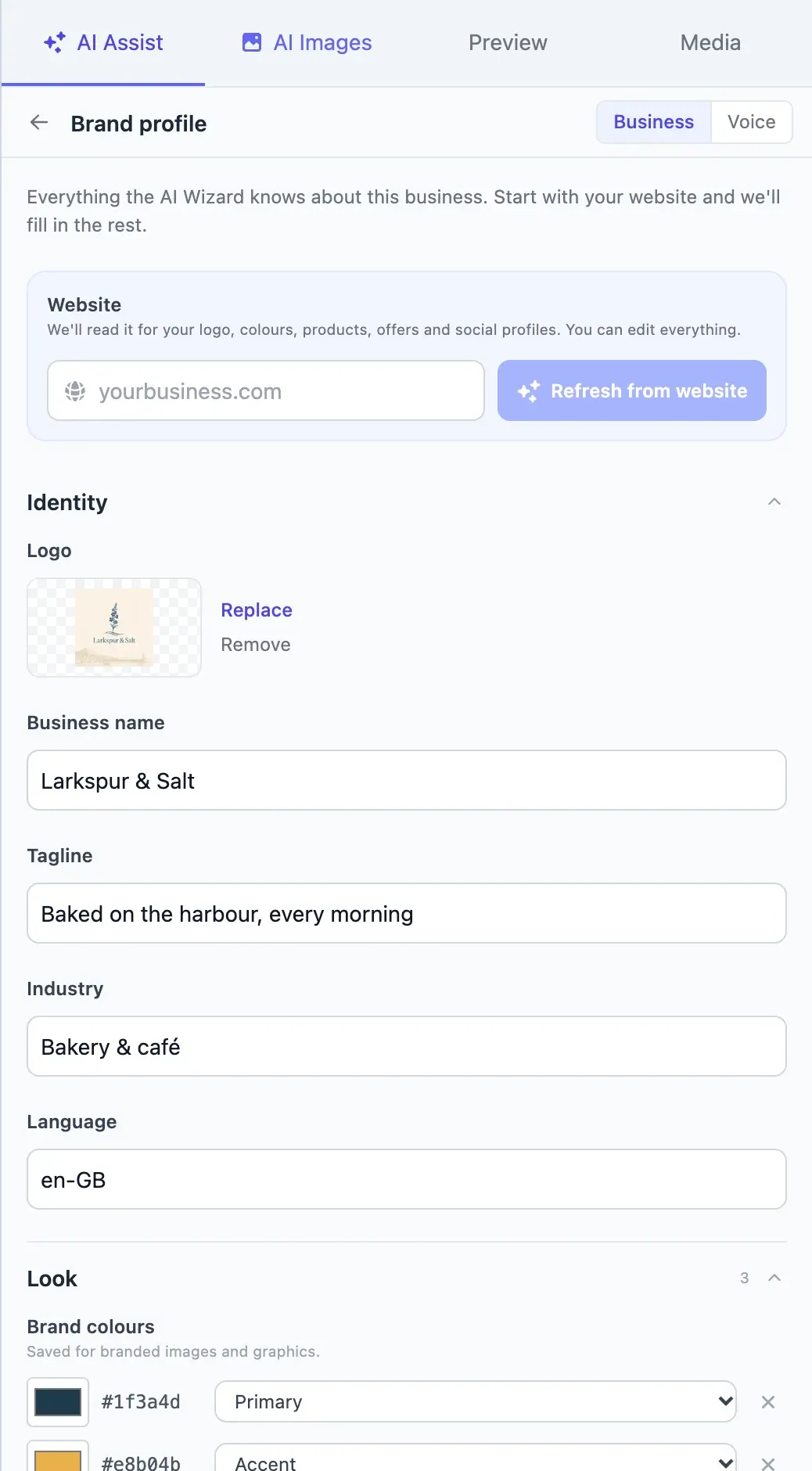
Voice is how you say things. Facts - products, prices, opening hours, the address, current offers - are what you are allowed to say, and they change more often. Keep them on a separate list, so updating the Christmas hours does not mean editing the voice guide. It also makes it obvious what a writer must check before posting.
A template to copy
Copy this into a doc and fill it in in about twenty minutes. If you manage several clients, keep one per client and send it to them to check - it is a useful onboarding exercise in itself.
- We sound: [word], not [word] · [word], not [word] · [word], not [word]
- We write for: [one or two sentences about the audience]
- We never say: [clichés, competitors, claims]
- Emoji: [never / at most one / freely] · Hashtags: [how many, where, which networks]
- Sounds like us: [paste a post] · Not like this: [paste a post]
- Facts to check every time: [prices, hours, offers, links]
Where Fluxi fits
Each social portfolio in Fluxi has its own brand voice with exactly these fields - tones, audience, emoji and hashtag rules, words to never mention and a writing sample - and a business profile for the facts, which Fluxi can fill in by reading your website. AI Agent uses both every time it writes, so a client’s posts sound like that client, not like the last one you worked on.